The competitiveness of an innovation ecosystem lies not in the accumulation of individual elements, but in the efficiency of connections between resources. Innovation ecosystem operators play a crucial role by weaving together scattered projects, capital, policies, and industry needs into a functional network. Organizing competitions and collaborating with governments are two interlocking gears within this network.
Events: The entry point for resource filtering and aggregation
An innovation and entrepreneurship competition can gather hundreds of projects in a short time. Teams span diverse technology domains, while the judging panel includes venture capital firms, industry enterprises, and university research groups. Local governments use these events to identify projects with strong potential for commercialization. The true value lies not in the spectacle, but in serving as a mechanism to filter and connect resources.
As an operator of the innovation ecosystem, the competition organizer defines the rules. By setting challenges, evaluation criteria, and tracks, it determines "what kind of innovative resources we need" and establishes the structure for resource screening. For example, Huihuang Chuangzhi's competitions focus on industries such as electronic information, biomedicine, and high-end manufacturing. The track divisions directly align with regional industrial upgrade priorities, ensuring that participating projects are inherently aligned with industry needs. This proactive screening capability is a prerequisite for an efficient resource network.
Government Partnerships: Amplifying Your Resource Network
Once the competition ecosystem matures, the government will become a core partner. While there is genuine demand for innovation resources from the government, administrative constraints and operational logic limit their ability to flexibly sustain resource networks like market entities do. Competitions provide a quantifiable entry point: metrics such as the number of participating projects, quality distribution, and data on commercialization can be integrated into policy evaluation frameworks.
From an operator's perspective, government collaboration provides critical support across resources, networks, and policy dimensions. Governments offer industrial guidance funds, tax incentives, and implementation space; once these resources connect to the project pool filtered by competitions, they form a "competition discovers projects—government matches policies—operator drives implementation" chain. At the Tongshan (Wuhan) Offshore Innovation Center operated by Hahui Chuangzhi, government partnerships and competition hosting advance in synergy along this logic.
Collaboration Mechanism: Aligning Events with Government Initiatives
There is a mutually reinforcing relationship between events and government collaboration. Events deliver pre-vetted project resources to the government, while government participation enhances the event's credibility and policy appeal, attracting more high-quality projects. Within this cycle, operators play a pivotal role by bridging both sides: they understand project technical directions and funding needs, as well as government industrial priorities and constraints, enabling them to find common ground among diverse stakeholders.
Resource networks don't form organically. They require a continuously operating middle layer to allocate information, capital, policies, and spatial resources on demand. Huihui Chuangzhi has served nearly 1,000 innovative enterprises and disbursed over 1.5 billion yuan in support funds. These figures reflect the synergy across multiple business lines: competitions, government partnerships, and industrial operations. Ecosystem co-building is not a slogan—it's the result of intentional mechanism design.
The value of operating a tech innovation ecosystem lies not in controlling resources, but in establishing mechanisms that enable resource flow and matching. Hosting competitions and collaborating with governments are two interlocking pillars within this mechanism.
Related Articles
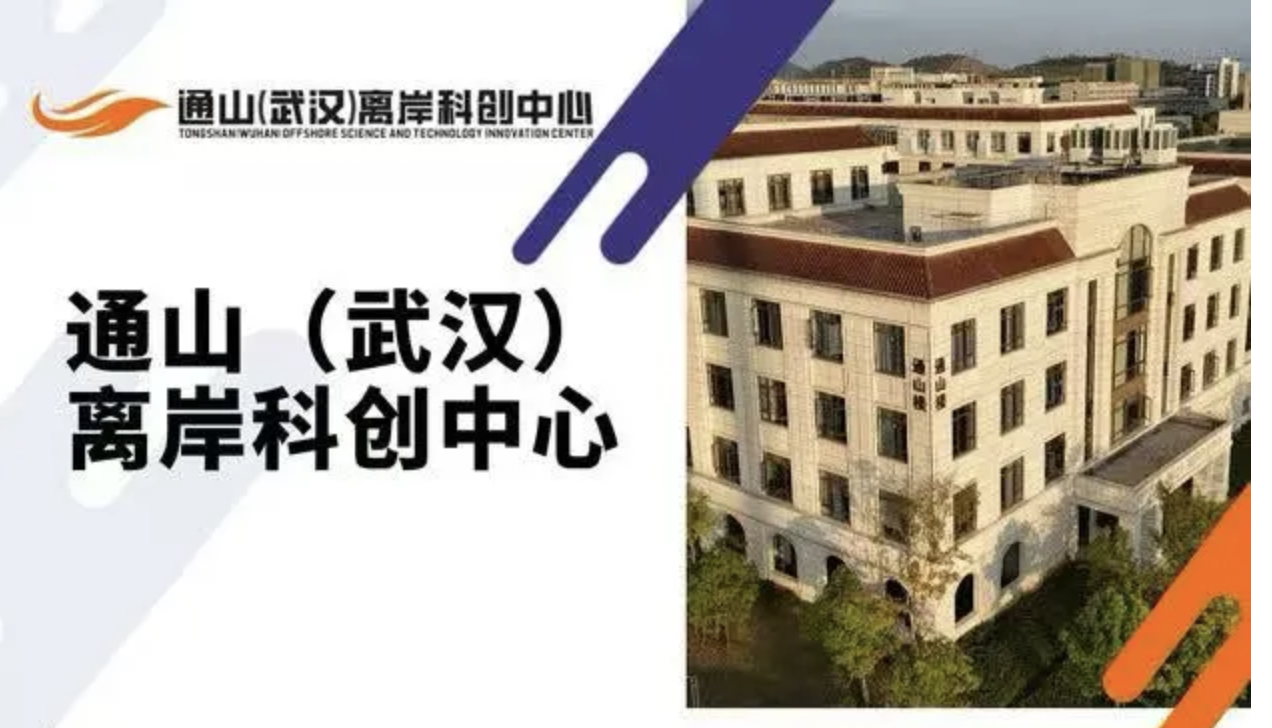
Cross-Regional Exchange Takes a New Step: Daye Delegation Visits Tongshan (Wuhan) Offshore Innovation Center
He Guoqing surveys the Wuhan Optics Valley talent enclave in Wuxi Huishan Economic Development Zone
He Guoqing, Deputy Secretary of the Huishan District Committee and Secretary of the Party Working Committee and Director of the Management Committee of Huishan Economic and Technological Development Zone, led a delegation to Wuhan for research. In the afternoon, the delegation arrived at the Wuxi (Huishan) Optics Valley Talent Enclave in Wuhan and conducted an on-site inspection of its construction and operations.
Haihui Chuangzhi Recognized as 2024 Annual Specialized and New Demonstration Service Institution
Recently, Huihui Chuangzhi was awarded the "2024 Specialized and New Service Demonstration Institution" title for its outstanding performance in serving specialized and new enterprises.